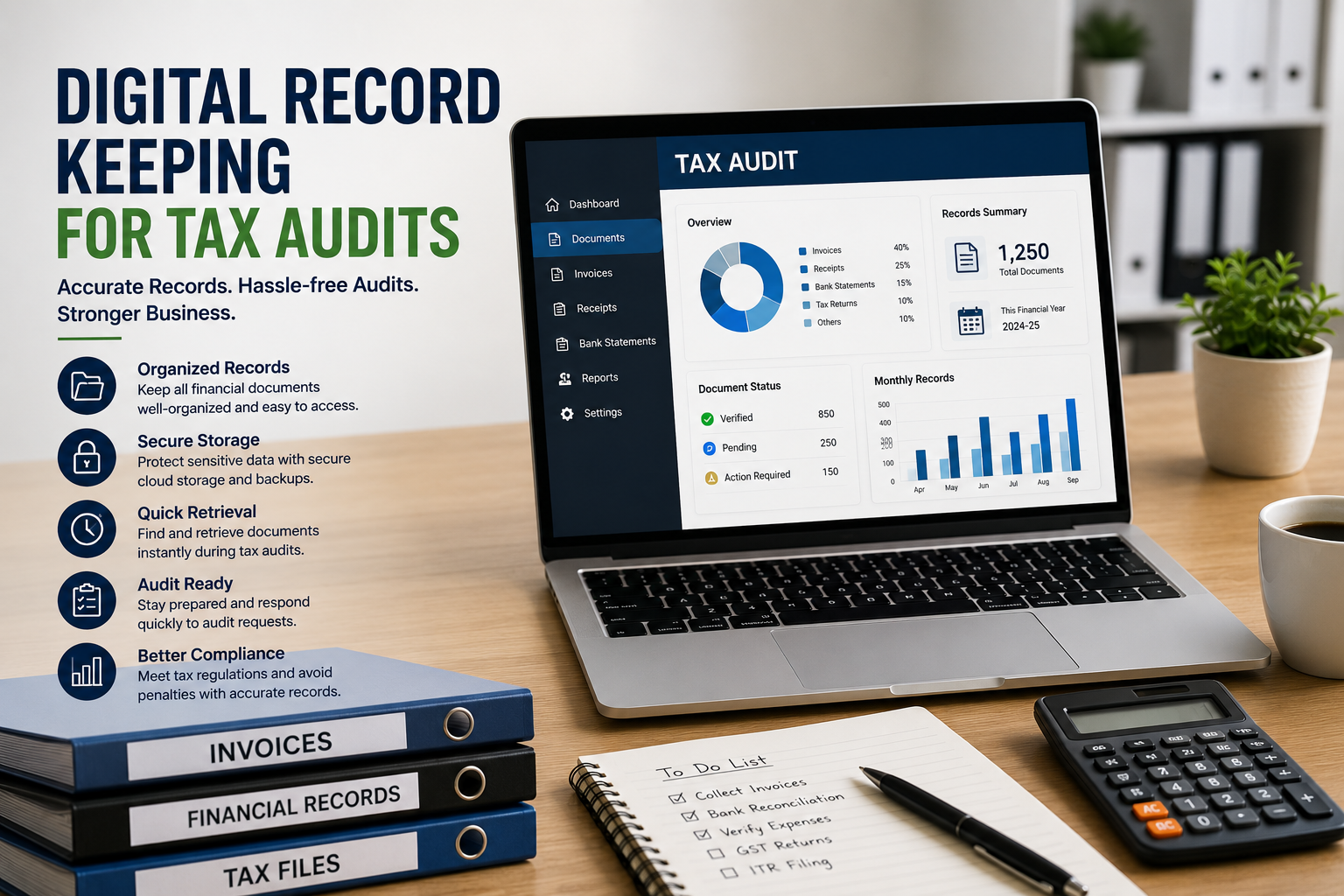
Importance of Digital Record Keeping for Tax Audits
In today's digital business environment, maintaining organized financial records is crucial for tax compliance and smooth business operations. Digital record keeping enables businesses to store, manage, and retrieve financial documents efficiently, making tax audits less stressful and more transparent.
As tax authorities increasingly adopt technology-driven verification systems, businesses must ensure that their financial records are accurate, accessible, and securely maintained.
What is Digital Record Keeping?
Digital record keeping refers to the process of storing financial documents electronically rather than relying solely on paper-based records. These records may include:
- Sales Invoices
- Purchase Bills
- GST Returns
- Income Tax Returns
- Bank Statements
- Payroll Records
- Expense Receipts
- Audit Reports
Digital records can be stored using accounting software, cloud storage solutions, or dedicated document management systems.
Benefits of Digital Record Keeping for Tax Audits
1. Easy Access to Documents
Tax audits often require businesses to provide financial documents from previous years. Digital records allow quick retrieval of invoices, receipts, and statements without searching through physical files.
2. Improved Accuracy
Manual record management can lead to data entry mistakes and misplaced documents. Digital systems reduce errors through automation and organized storage.
3. Better Tax Compliance
Businesses are legally required to maintain records for specified periods under Income Tax and GST regulations. Digital record keeping makes compliance easier and more reliable.
4. Enhanced Data Security
Digital documents can be protected through password protection, encryption, and cloud backups, reducing the risk of data loss due to theft, fire, or accidental damage.
5. Faster Audit Process
Well-organized digital records enable auditors and tax authorities to verify information quickly, reducing delays and administrative burden.
6. Cost Savings
Digital record management reduces printing, storage, and document handling costs while improving overall operational efficiency.
Best Practices for Digital Record Keeping
- Use reliable accounting software.
- Store records in secure cloud storage.
- Regularly back up financial data.
- Organize files by financial year.
- Maintain GST and Income Tax records separately.
- Restrict unauthorized access.
- Reconcile accounts regularly.
Documents Every Business Should Preserve Digitally
- GST Registration Certificate
- GST Returns (GSTR-1, GSTR-3B)
- Income Tax Returns
- TDS Returns
- Vendor Bills
- Customer Invoices
- Bank Statements
- Payroll Records
- Expense Receipts
- Financial Statements
Conclusion
Digital record keeping is no longer optional for businesses aiming to remain compliant and audit-ready. It improves accuracy, strengthens data security, simplifies tax audits, and helps businesses respond quickly to tax notices and verification requests. By adopting a structured digital documentation system, businesses can save time, reduce risks, and focus on growth with confidence.