CORPORATE LICENSES & IP
Trademark & Copyright
Your brand is your most valuable asset. The time, money, and creative energy you invest in building your logo, slogan, or unique software code are wasted if you do not legally protect them. Without official Intellectual Property (IP) registration, a competitor can legally steal your identity, confuse your customers, and capitalize on your hard work, and you will have very little legal recourse.
At The Online Tax, we simplify the complex world of IP law. Our legal experts handle comprehensive Trademark searches on the national database to ensure availability, file your application with the Controller General of Patents, Designs and Trade Marks (CGPDTM), and manage any departmental objections. We also secure your creative expressions—like website content, software, and marketing material—through Copyright registration, granting you exclusive ownership rights.
IP PROTECTION
Trademark vs. Copyright: What’s the Difference?
Understanding which type of IP protection you need is the first step to building a legally secured brand.
Trademark (Brand Identity):
Protects the elements that distinguish your goods or services in the marketplace.
- What it Protects: Logo, Brand Name, Slogan, specific color combinations, or sound marks.
- Purpose: Prevents competitor confusion and protects brand reputation.
- Creating Value: Registered marks are intangible assets that can be licensed, franchised, or sold.
- Validity: 10 Years (Renewable perpetually).
Copyright (Creative Expression):
Protects original literary, dramatic, musical, artistic works, and computer software.
- What it Protects: Software Code, Website Content, Books, Photos, Marketing videos, and Song lyrics.
- Purpose: Prevents unauthorized copying, reproduction, or distribution of creative work.
- Immediate Protection: Exists automatically from the moment of creation, but registration is strong legal proof.
- Validity: Lifetime of the author + 60 years.
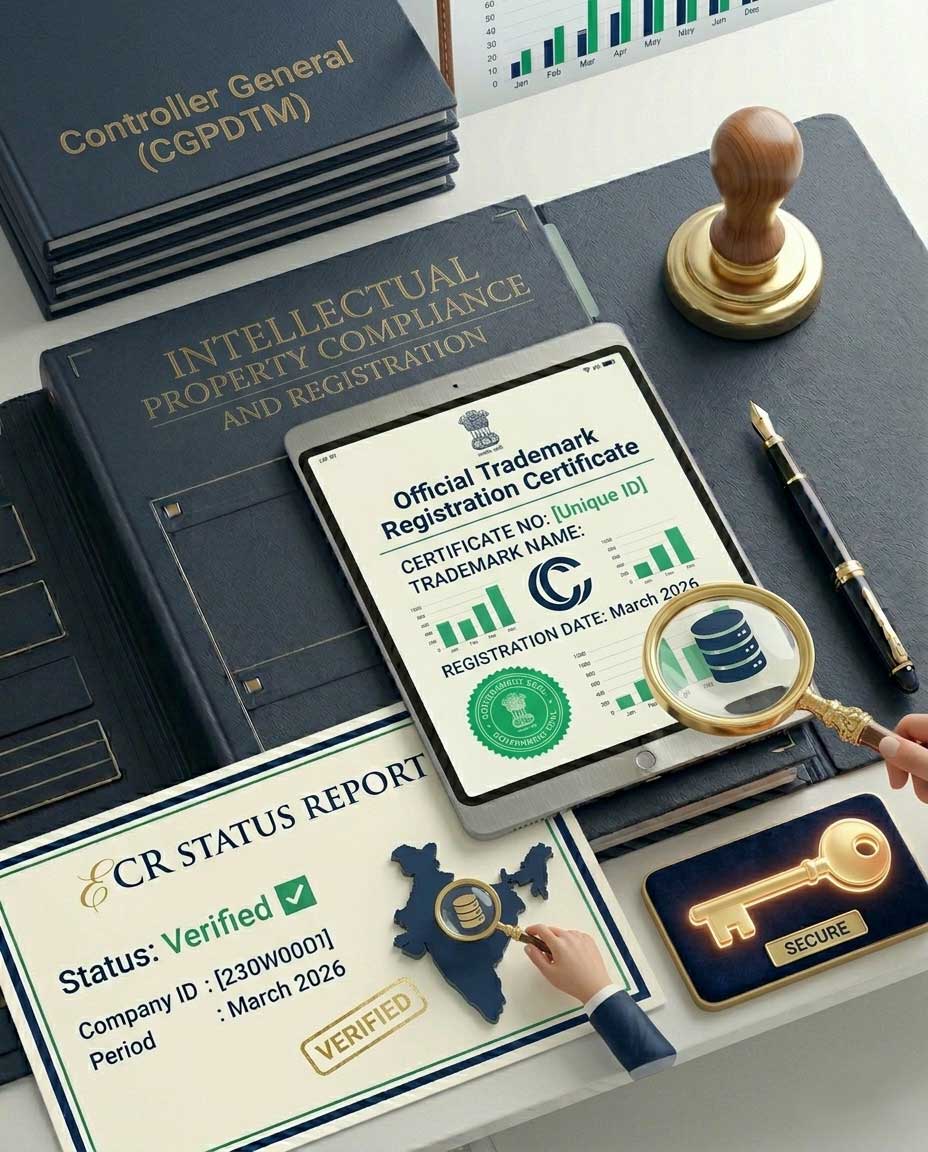
THE PROCESS
Securing Your IP Assets
Obtaining an official registration for a Trademark or Copyright is a legally structured process that requires specific details regarding your creation and its usage.
Public Search
For Trademarks, we perform a thorough search on the government portal to check for similar marks that might cause rejection.
Form TM-A & Affidavit
Drafting the legal application and a "User Affidavit" detailing when you first started using the brand in India.
Software Source Code (CR)
For copyrighting software or apps, we need a sample of the source code and object code (usually the first 20 and last 20 pages).
Sample of Work (CR)
High-resolution digital copies of your artwork, logo, website screenshots, or marketing material to be submitted to the Copyright Office.
CLARIFICATIONS
Frequently Asked Questions
Common doubts regarding IP timelines, enforcement, and symbol usage.
® (Registered symbol): You must not use this until you have the final Registration Certificate. Using ® prematurely is a punishable offense under the Trade Marks Act.