INCOME TAX SOLUTIONS
TAN & TDS Returns Filing Online I Expert CA Services India
If you are running a business, paying salaries to employees, or hiring professional contractors, the government shifts the tax collection responsibility onto you. You are required to obtain a Tax Deduction and Collection Account Number (TAN), deduct tax at the source (TDS), deposit it, and file quarterly returns.
At The Online Tax, we turn this quarterly compliance headache into a seamless background process. Our Chartered Accountants handle your TAN application, calculate exact TDS amounts for different vendor categories, generate challans, and file your Form 24Q, 26Q, or 27Q flawlessly. Stay compliant, avoid the severe ₹200-per-day late penalties, and ensure your employees and vendors get their Form 16/16A on time.
 in Prayagraj
UNDERSTANDING TDS FORMS
Which Quarterly Return Do You Need?
TDS returns in Prayagraj are filed on a quarterly basis. The form you use depends entirely on the nature of the payment you made and the residency status of the person receiving it.
Form 24Q (For Salaries)
Mandatory for any employer paying a salary that falls into a taxable bracket.
- Filed quarterly by employers (Companies, Firms, or Individuals subjected to tax audit).
- Requires detailed breakdown of employee salary, deductions under Chapter VI-A, and the exact TDS deducted.
- Forms the basis for generating Form 16 (Part A and B) for your employees at year-end.
Form 26Q & 27Q (Non-Salary & NRI)
For all other business payments made to resident contractors, professionals, or foreign entities.
- Form 26Q (Resident): Used for TDS on payments like rent (Sec 194I), professional fees (194J), contractor payments (194C), or commission (194H) to resident Indians.
- Form 27Q (Non-Resident): Used when making payments (like royalties or technical fees) to NRIs or foreign companies, incorporating DTAA rates.
- Form 27EQ (TCS): For sellers who are required to Collect Tax at Source (TCS) on specific goods like motor vehicles or scrap.
DOCUMENTATION
Information Required for Filing
To ensure your TDS Return in Prayagraj matches the government portal and your deductees receive their tax credits seamlessly, we need accurate payment data for the quarter.
Deductor Details
Your valid TAN (Tax Deduction Account Number) and PAN, along with the authorized signatory's details.
Deductee PANs
Valid PAN cards of all employees or vendors. Deducting TDS without a PAN attracts a much higher penalty rate (usually 20%).
Payment & Invoice Data
Exact amount paid or credited to the vendor/employee, the date of payment, and the specific section under which TDS was deducted.
TDS Challans (CSI File)
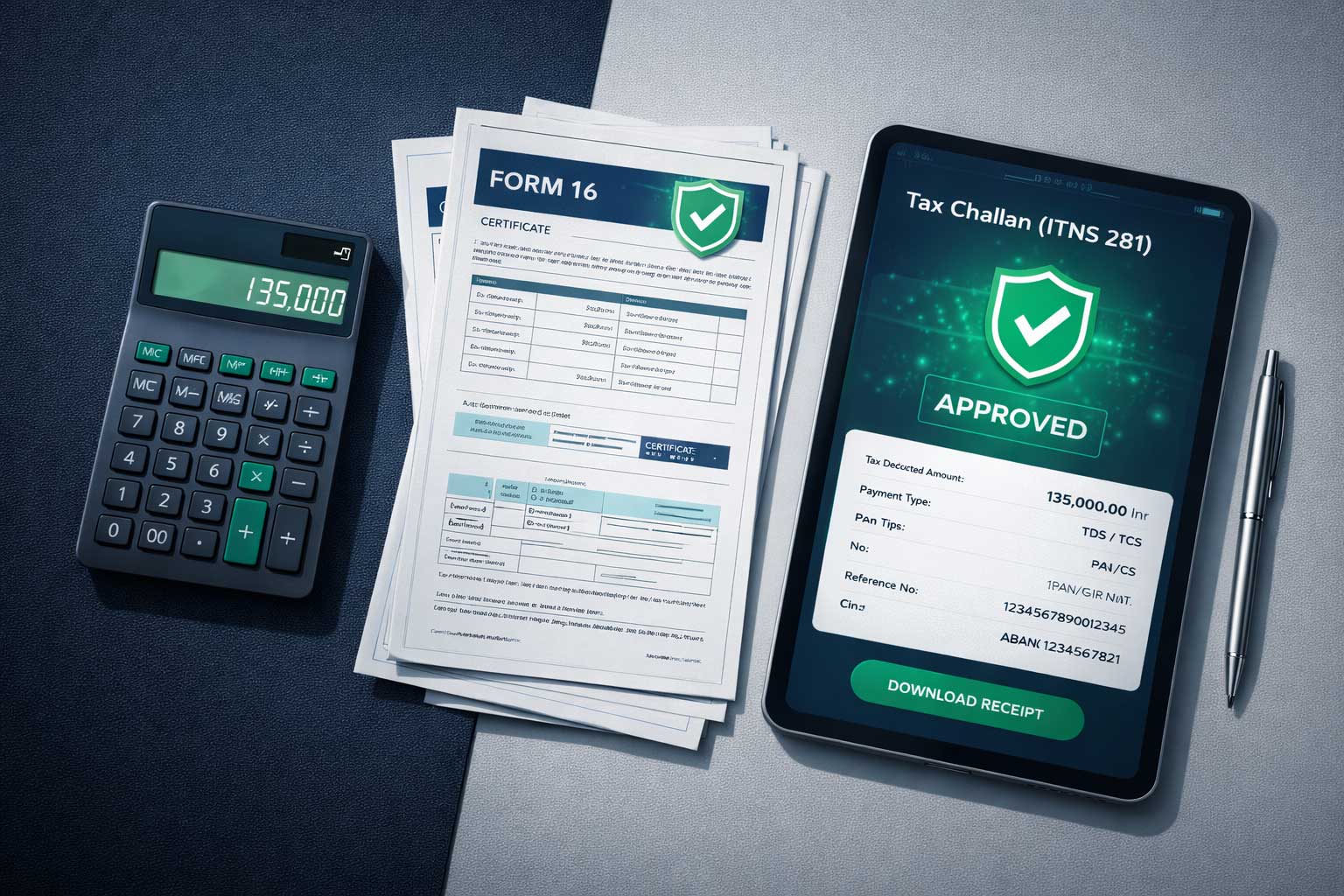
Proof that the deducted tax was deposited into the government treasury via authorized banks (Challan ITNS 281).
CLARIFICATIONS
Frequently Asked Questions
Essential compliance answers for employers and businesses regarding TDS.
- Q1 (April to June): July 31st
- Q2 (July to September): October 31st
- Q3 (October to December): January 31st
- Q4 (January to March): May 31st
Professional assistance for TDS Return in Prayagraj ensures accurate filing, timely compliance, and helps avoid errors, notices, and penalties from the Income Tax Department. You can contact us for more details.