LEGAL REPRESENTATION & APPEALS
Income Tax Appeal to CIT(A)
If an Assessing Officer has finalized a scrutiny assessment or issued a penalty order that you strongly disagree with, you are not forced to simply pay an unfair tax demand. The Indian tax justice system grants you the right to challenge the officer's decision by filing the First Appeal before the Commissioner of Income Tax (Appeals) [CIT(A)] or the Joint Commissioner (Appeals) [JCIT(A)].
With the enforcement of the new Income Tax Act, 2025, the appellate framework has been entirely overhauled. The old Section 246A has been replaced by Section 357, and the traditional Form 35 has been retired in favor of the strict, new digital Form 99. At The Online Tax, our tax litigators specialize in the National Faceless Appeal Centre (NFAC) procedures. We draft air-tight "Grounds of Appeal" and "Statements of Fact" to systematically dismantle incorrect additions and secure justice for your business.

THE BATTLEGROUND
Orders You Can Appeal Against
You cannot appeal an order simply because the tax is high. You must challenge specific legal interpretations, factual errors, or unfair additions made by the Assessing Officer.
Appealable Assessment Orders:
- Scrutiny Additions: Orders passed after scrutiny where the officer disallowed your legitimate business expenses or added fictional income to your total.
- Best Judgment (Sec 144): Ex-parte orders passed by the officer because you failed to respond to previous notices, resulting in an arbitrary tax demand.
- Reassessment Orders: Orders where income was alleged to have "escaped assessment" (previously Sec 147/148) and massive back-taxes are being demanded.
Penalty & TDS Orders:
- Concealment Penalties: Orders imposing massive penalties (up to 200% of tax) for alleged under-reporting or misreporting of income.
- TDS/TCS Defaults: Orders treating you as an "assessee-in-default" for failing to deduct TDS, leading to the disallowance of your business expenses.
- Refund Rejections: Orders where the officer adjusted your rightful refund against past disputed demands without following the proper legal procedure.
THE 2026 PROCEDURE
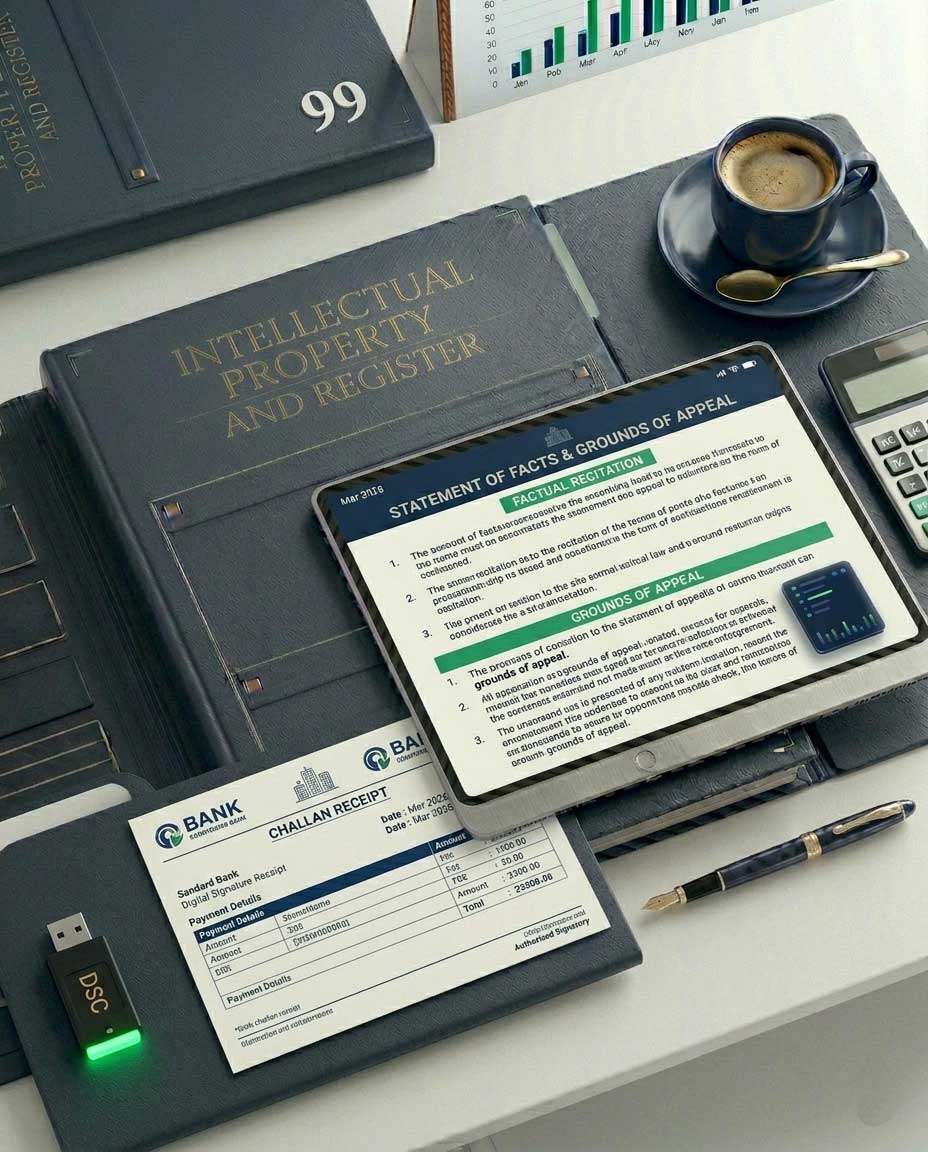
Drafting Form 99 (Replaces Form 35)
The new Income Tax Act 2025 mandates strict electronic filing. An appeal can be instantly rejected if the self-assessed tax is not paid or if the documentation is formatted incorrectly.
Grounds of Appeal
The most critical legal document. We draft concise, numbered legal points stating exactly why the Assessing Officer erred in law and fact.
Statement of Facts
A comprehensive, chronological narrative of your case history, explaining the business reality behind the disputed transactions.
Appeal Fee & Tax Proof
Under Section 358(6), the appeal is invalid unless the self-assessed tax is paid. We also process the mandatory appellate filing fee challan.
DSC Authentication
Under the new Rule 167(2), Form 99 must be electronically filed and authenticated using the taxpayer's Digital Signature Certificate (DSC).
CLARIFICATIONS
Frequently Asked Questions
Critical timelines and rules under the new Faceless Appeal regime.