CORPORATE LICENSES & IP
Professional Tax
Despite its name, Professional Tax is not just for doctors or lawyers. It is a mandatory state-level tax levied on every individual earning an income from a salary, a trade, or a profession. If you are operating a business or hiring employees in states like Maharashtra, Karnataka, Tamil Nadu, or West Bengal, you are legally obligated to register for and remit Professional Tax.
At The Online Tax, we handle the intricacies of state-specific tax laws so you don't have to. We help business owners secure both their personal Enrollment Certificates (PTEC) and their employer Registration Certificates (PTRC). We ensure your monthly payroll deductions are calculated perfectly and deposited on time, shielding your company from accumulating state fines and strict departmental notices.

THE TWO CERTIFICATES
Do You Need PTEC, PTRC, or Both?
Compliance depends on whether you are simply running a business yourself, or if you have started hiring employees to work for you.
PTEC (For the Business Owner):
Professional Tax Enrollment Certificate. This is your personal liability to the state.
- Who Needs It: Sole Proprietors, Company Directors, LLP Partners, Freelancers, and independent professionals (CAs, Doctors, Architects).
- Payment Structure: A fixed annual tax (typically around ₹2,500) paid directly to the state government by the business entity or professional.
- Requirement: It is often a mandatory prerequisite for obtaining other local licenses or opening a commercial bank account in applicable states.
PTRC (For the Employer):
Professional Tax Registration Certificate. This is your liability as an employer.
- Who Needs It: Any business (Proprietorship, Pvt Ltd, or Firm) that has hired employees with salaries above the state's minimum threshold.
- Payment Structure: The employer must deduct the tax (usually ₹200/month) from the employee's salary and deposit it to the government.
- Employer Liability: If you fail to deduct the tax from your employee's salary, the government will force you to pay it out of your own pocket along with penalties.
DOCUMENTATION
State-Level Processing
Since Professional Tax is administered by individual state commercial tax departments, the documentation must accurately prove your business location and employee count.
Entity Proof
Certificate of Incorporation, Company PAN card, and the existing Trade License or GST Registration of the business.
Director/Owner KYC
PAN Card, Aadhaar Card, and passport-size photographs of all directors, partners, or the sole proprietor.
Corporate Bank Proof
A canceled cheque or recent bank statement of the current account in the name of the business entity.
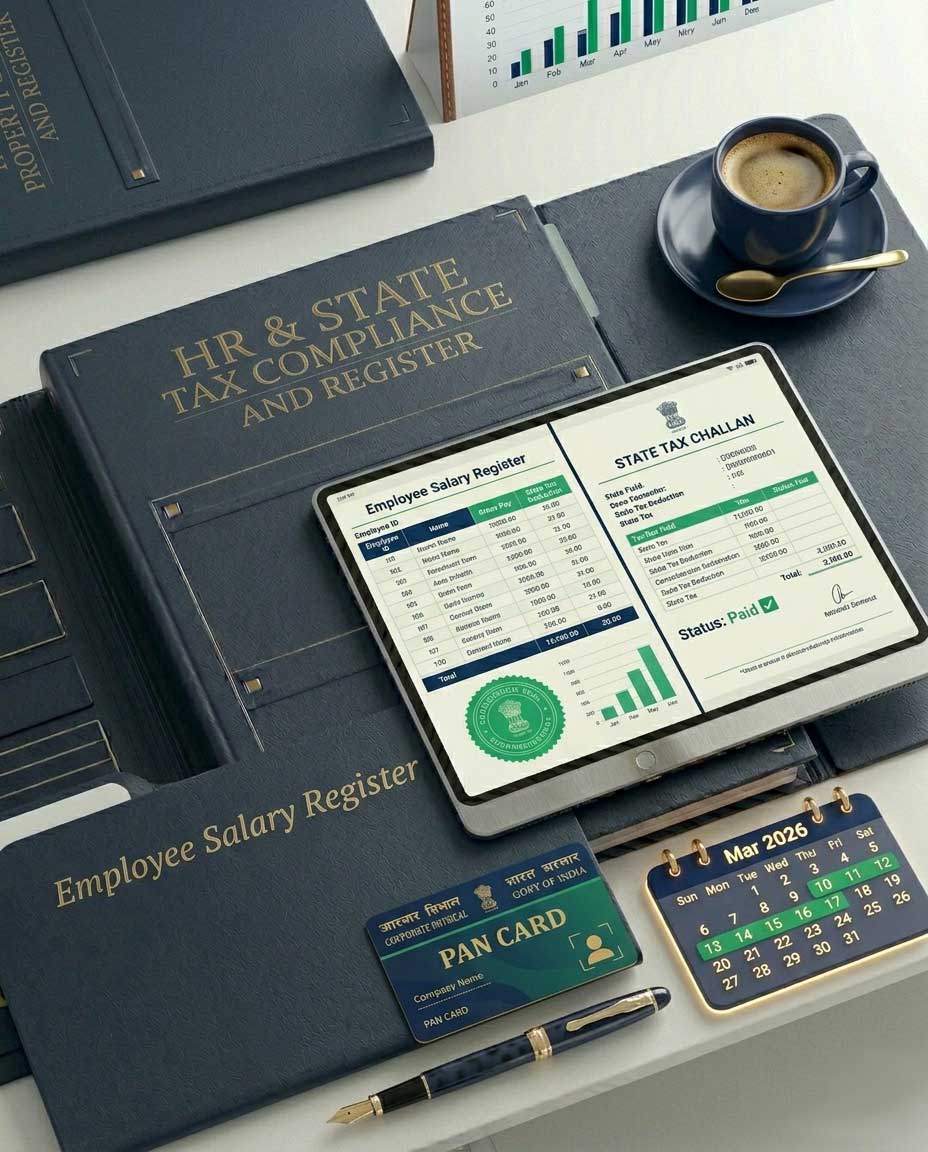
Employee Salary Register
(For PTRC only) A list of your current employees, their date of joining, and their gross monthly salary to determine the correct tax slab.
CLARIFICATIONS
Frequently Asked Questions
Answers regarding state applicability, deduction rules, and filing deadlines.