Business & Firm Formation
Partnership & Proprietorship
Not every business needs the complex corporate structure of a Private Limited Company right out of the gate. If you are launching a local retail shop, starting a freelance consulting practice, or entering a traditional trade with a trusted family member, Sole Proprietorships and Partnership Firms offer the fastest, most cost-effective way to get off the ground.
At The Online Tax, we simplify your launch. While these structures are legally simpler, getting the foundational paperwork right—like a rock-solid Partnership Deed or an MSME Udyam Registration—is crucial to prevent future disputes and open your business bank accounts smoothly. We handle the drafting, notarization, and basic tax registrations so you can start trading immediately.

CHOOSE YOUR PATH
Which Structure is Right for You?
Both structures offer minimal compliance and fast setup, but the choice depends entirely on whether you are flying solo or teaming up with co-founders.
Sole Proprietorship:
The simplest business form, owned and managed by a single individual.
- Zero Setup Time: A proprietorship doesn't need formal incorporation. You simply obtain an MSME certificate, Shop & Establishment License, or GSTIN under your name to start.
- Absolute Control: You make 100% of the decisions and keep 100% of the profits.
- Lower Taxes: Profits are taxed at the individual income tax slab rates, which can be much cheaper than flat corporate taxes for small incomes.
- Unlimited Liability: Your personal assets are tied to the business. You are personally responsible for all business debts.
Partnership Firm:
A traditional structure for 2 or more individuals pooling resources and sharing risks.
- Shared Burden: Capital investment, management duties, and business risks are shared among partners.
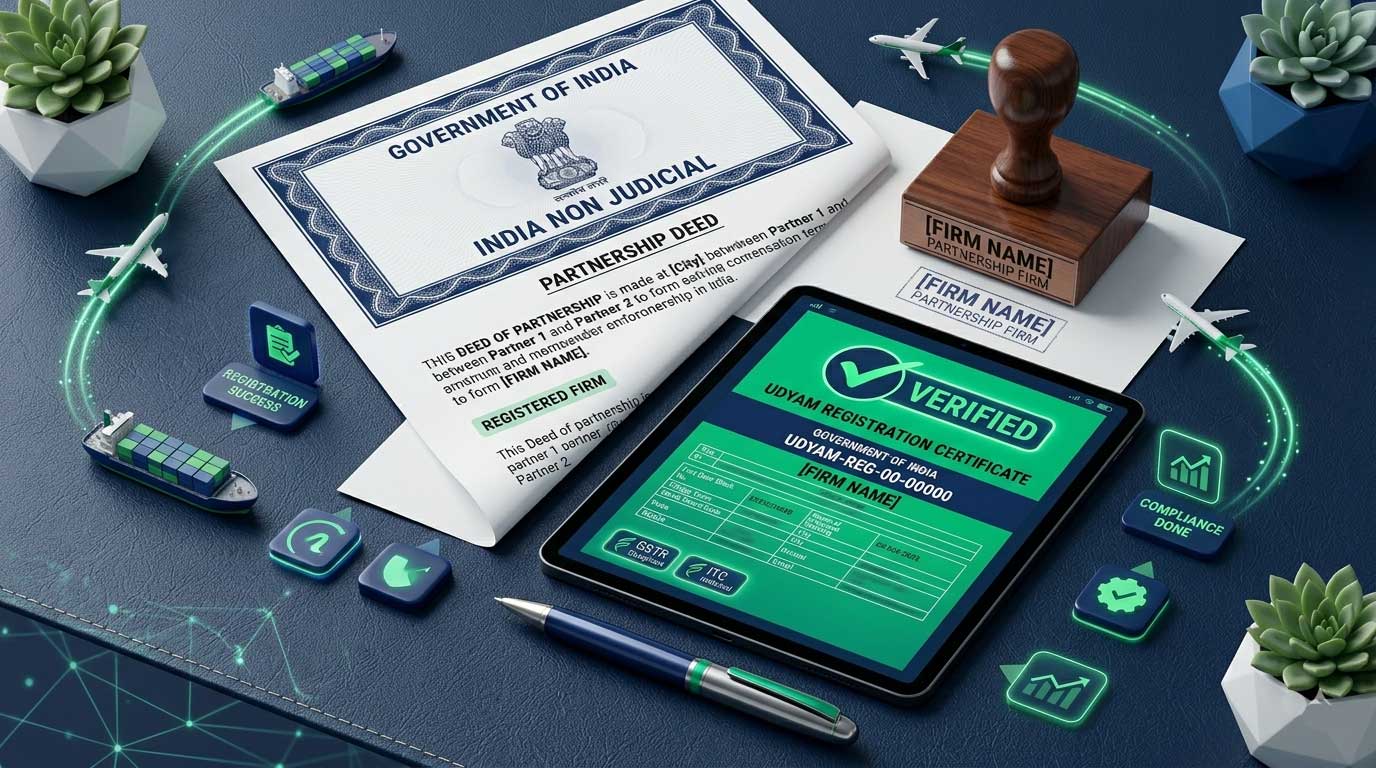
- Partnership Deed: Governed by a legal agreement detailing profit ratios, salaries, and interest on capital. We draft this to prevent internal conflicts.
- Optional Registration: You can operate as an unregistered firm, or optionally register with the Registrar of Firms (RoF) for added legal rights.
- Unlimited Liability: Partners are jointly and individually liable for the firm's debts and legal obligations.
DOCUMENTATION
Basic Paperwork, Fast Processing
Because there is no MCA involvement, the documentation required is basic. We use these documents to draft your deeds, create your firm's PAN, and secure your local trade licenses.
Personal KYC
PAN Card and Aadhaar Card of the proprietor or all the partners.
Business Address Proof
Electricity bill of the shop or office. If rented, a standard Rent Agreement and NOC from the landlord.
Business Objectives
A clear outline of the business activities and, for partnerships, the agreed-upon profit-sharing ratio between partners.
Bank Statement
A recent savings bank account statement or cancelled cheque of the proprietor/partners to link to the new MSME or GST registration.
CLARIFICATIONS
Frequently Asked Questions
Common doubts regarding local business setups, taxes, and bank accounts.
Partnership Firm: A partnership is treated as a separate tax entity by the Income Tax Department and is subject to a flat tax rate of 30% on its profits, plus applicable cess and surcharge.