INCOME TAX SOLUTIONS
ITR-5, 6 & 7: Corporate & Trust Filing
Tax compliance for registered entities—whether it is a fast-growing Startup, an established LLP, a Private Limited Company, or a Charitable Trust—requires an entirely different level of precision. The stakes are higher, statutory audits are often mandatory, and the scrutiny from the Income Tax Department is rigorous.
At The Online Tax, our panel of seasoned Chartered Accountants acts as your virtual CFO. We navigate the complexities of corporate tax rates, MAT (Minimum Alternate Tax), dividend distributions, and Section 11/12 exemptions for NGOs. We ensure your institutional tax filings are flawless, timely, and perfectly aligned with your RoC (Registrar of Companies) and GST data.

ENTITY CLASSIFICATION
Which Form Applies to Your Organization?
Unlike individual tax forms based on income sources, these forms are strictly categorized by your legal entity structure. Filing the incorrect form will instantly invalidate your return.
ITR-5 (Firms & LLPs)
Designed for collaborative business structures that are not registered as companies.
- Limited Liability Partnerships (LLPs)
- Traditional Partnership Firms
- Association of Persons (AOPs)
- Body of Individuals (BOIs)
- Co-operative Societies & Local Authorities
ITR-6 (Companies)
Mandatory for all companies registered under the Companies Act 2013 (or 1956), operating for profit.
- Private Limited Companies (Pvt Ltd)
- Public Limited Companies
- One Person Companies (OPC)
- Section 8 Companies (Not claiming Sec 11 exemption)
ITR-7 (Trusts & NGOs)
Exclusively for entities claiming specific tax exemptions under the Income Tax Act.
- Charitable / Religious Trusts (Sec 139(4A))
- Political Parties (Sec 139(4B))
- Scientific Research Associations (Sec 139(4C))
- Schools, Colleges & Hospitals claiming exemptions
DOCUMENTATION
Institutional Requirements
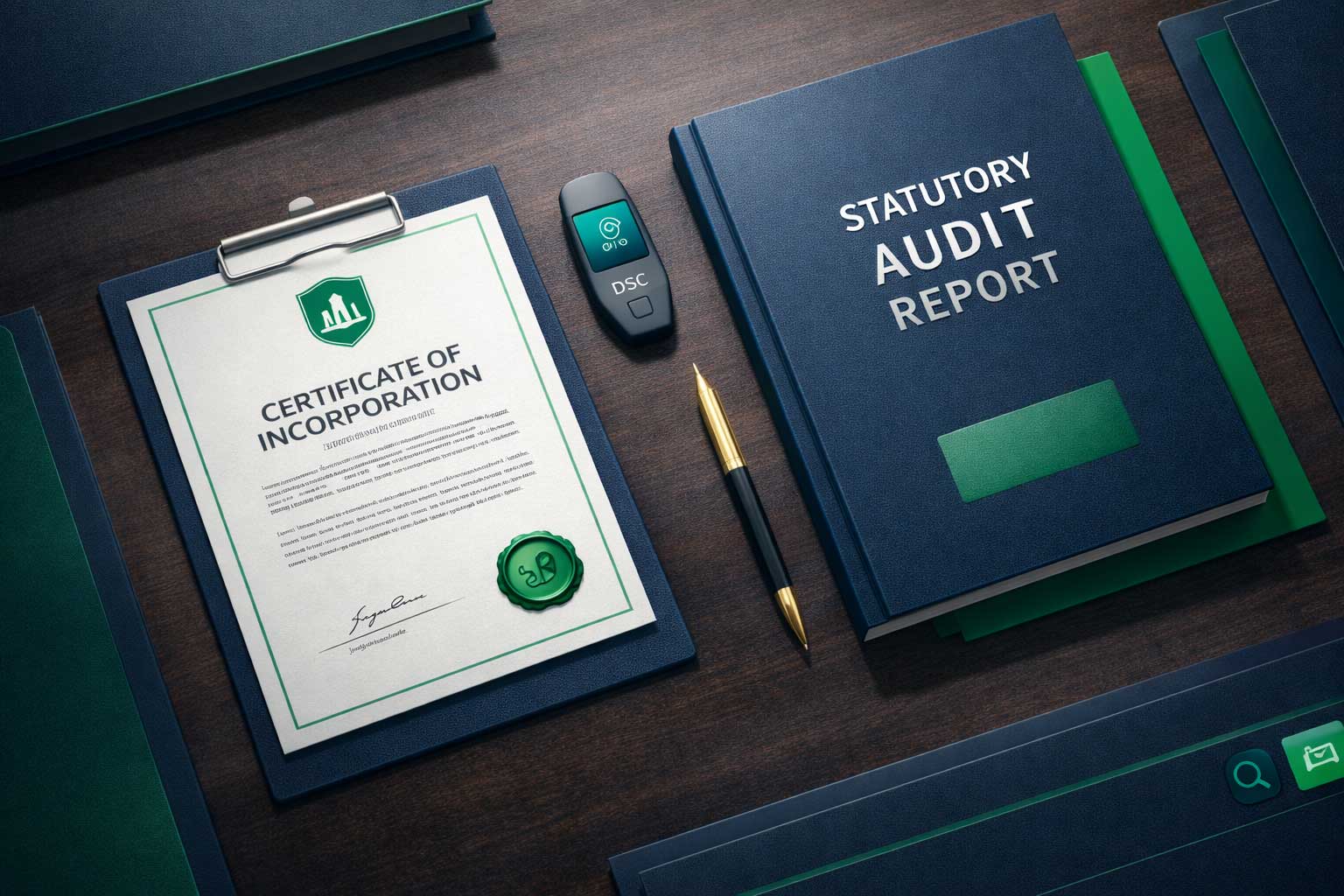
Corporate tax returns require a robust paper trail. All data must be mathematically verifiable and backed by statutory audits. Our team will coordinate directly with your accounts department to gather these assets.
Audited Financials
Statutory Audit Report, Balance Sheet, Profit & Loss statement, and Notes to Accounts.
Founding Documents
Certificate of Incorporation, MoA/AoA, Partnership Deed, or Registered Trust Deed.
Digital Signature (DSC)
A valid Class 3 Digital Signature Certificate of the designated Director, Partner, or Trustee is mandatory for e-verification.
Stakeholder KYC
PAN, Aadhaar, and DIN (Director Identification Number) of all active directors or partners.
CLARIFICATIONS
Corporate Tax FAQs
Expert insights into company, firm, and institutional income tax compliance.