GST Compliance Management
Online GST Registration in Prayagraj
Stepping into the world of business means stepping into the world of the Goods and Services Tax (GST). Whether you are launching a new e-commerce store, expanding your local shop across state lines, or crossing the mandatory turnover threshold, securing your 15-digit GSTIN is your legal license to grow.
At The Online Tax, we eliminate the bureaucratic red tape. Our GST experts handle the entire registration process—from ARN generation to resolving queries raised by the GST officer—ensuring you receive your GST Certificate securely and swiftly. We set your business up for compliance from day one, so you can focus entirely on your sales.
MANDATORY VS VOLUNTARY
Who Needs a GST Registration in Prayagraj?
While any business can register voluntarily to claim Input Tax Credit (ITC) and build corporate credibility, the law mandate registration for specific business activities and turnover brackets.
Mandatory Registration Criteria:
- Turnover Threshold (Goods): If your business exclusively supplies goods and your aggregate annual turnover exceeds ₹40 Lakhs (₹20 Lakhs for special category states).
- Turnover Threshold (Services): If you supply services and your aggregate annual turnover exceeds ₹20 Lakhs (₹10 Lakhs for special category states).
- Inter-State Sales: If you supply goods from one state to another, regardless of your turnover amount.
- E-commerce Sellers: Anyone selling goods or services through an e-commerce platform like Amazon, Flipkart, or Swiggy.
- Casual & Non-Resident Taxpayers: Individuals occasionally undertaking transactions in a state where they have no fixed place of business.
Exempt from Registration:
- Agriculturists: Individuals engaged purely in the supply of produce out of cultivation of land.
- 100% Exempt Supplies: Businesses exclusively engaged in supplying goods or services that are wholly exempt from GST (e.g., specific raw food items, educational services).
- Non-Taxable Goods: Businesses dealing exclusively in items outside the purview of GST (e.g., petrol, crude oil, alcohol for human consumption).
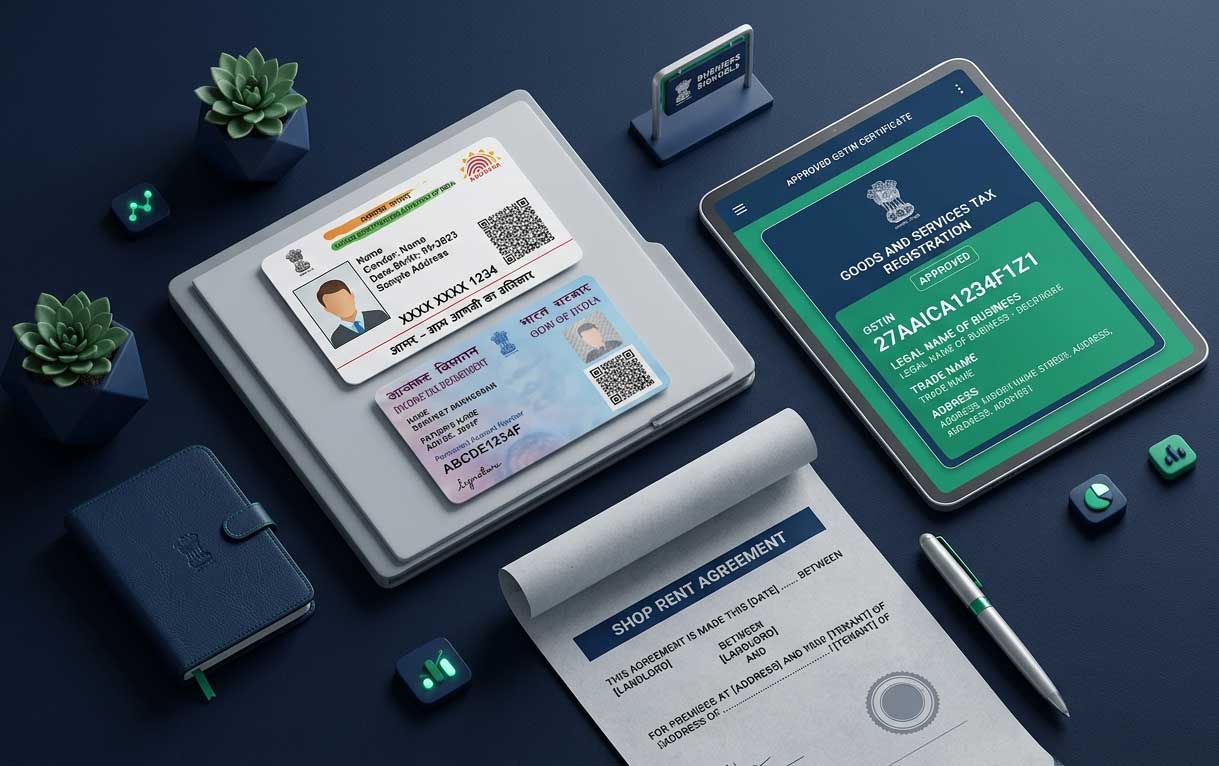
DOCUMENTATION
What You Need to Get Started
A flawless GST application prevents department rejections and field visits. Provide us with these core documents, and our team will draft the necessary NOCs and format them to government standards.
Identity Proofs
PAN Card and Aadhaar Card of the Proprietor, all Partners, or Company Directors. Aadhaar must be linked to a mobile number for OTP verification.
Business Constitution
Certificate of Incorporation, Partnership Deed, or MSME Udyam Registration (for Proprietorships) to prove business existence.
Address Proof
Latest Electricity Bill or Property Tax Receipt. If rented, a Rent Agreement and a No Objection Certificate (NOC) from the owner.
Bank Details
A cancelled cheque or recent bank statement containing the applicant's name, bank account number, and IFSC code.
CLARIFICATIONS
Frequently Asked Questions
Common doubts regarding the Goods and Services Tax registration process.