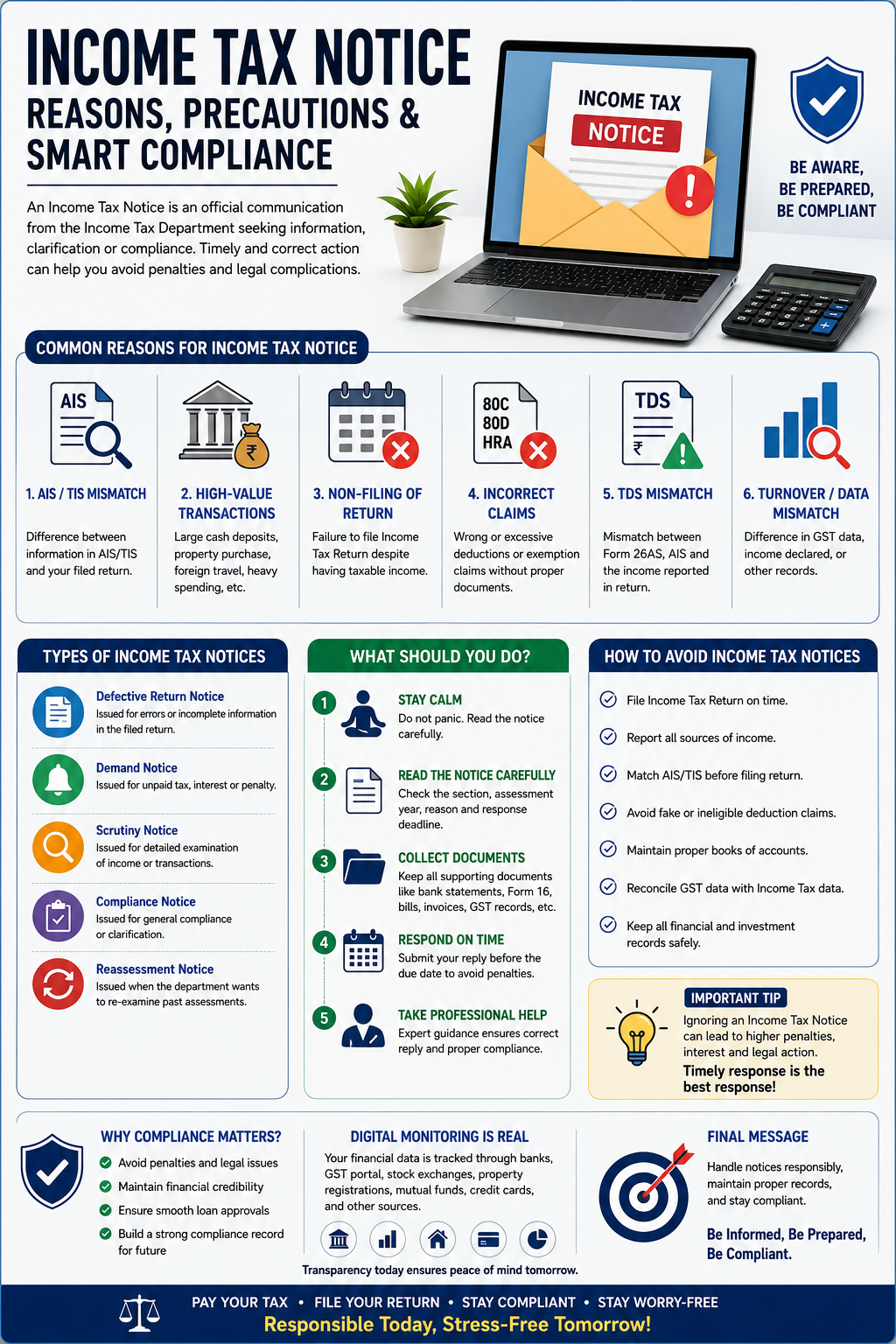
Income Tax Notice: What Every Taxpayer Should Understand
An Income Tax Notice is an official communication issued by the Income Tax Department when clarification, verification, or correction is required regarding a taxpayer’s financial information. In recent years, notices have become more common because financial transactions are now digitally tracked and matched with PAN records.
Many people become nervous immediately after receiving a notice, but every notice does not mean penalty or investigation. In many situations, the department simply seeks additional information or correction in records.
Understanding the reason behind the notice and responding properly is extremely important for maintaining smooth tax compliance.
Why Income Tax Notices Are Increasing
The tax department now receives financial information from multiple sources such as:
- Banks
- GST records
- Stock market transactions
- Property registrations
- Credit card companies
- Mutual fund investments
- Online platforms
Because of this digital monitoring system, even small mismatches can be detected automatically.
If the information filed in Income Tax Returns does not match departmental records, a notice may be generated.
Major Reasons for Receiving an Income Tax Notice
Difference in AIS and Filed Return
AIS and TIS reports contain financial details linked with PAN. If income shown in the return differs from these records, the department may seek clarification.
Large Financial Transactions
High-value activities such as:
- Cash deposits
- Luxury spending
- Property purchase
- Foreign travel
- Heavy credit card usage
may attract scrutiny when income declaration appears insufficient.
Non-Filing of Return
If taxable income exists but the taxpayer fails to file the return within the prescribed time, compliance notices can be issued.
Incorrect Tax Claims
Claiming deductions or exemptions without proper eligibility or supporting documents can create future problems.
Turnover Mismatch
Businesses sometimes report different turnover figures in GST and Income Tax filings. Such inconsistencies may trigger notices.
Hidden Income Sources
Ignoring interest income, trading income, rental income, or freelance receipts is another common reason behind departmental communication.
Types of Notices Commonly Issued
The department may issue notices for:
- Return correction
- Tax demand
- Scrutiny assessment
- Compliance verification
- Reassessment proceedings
Every notice carries a different purpose, section reference, and response deadline.
What Taxpayers Should Do After Receiving a Notice
Stay Calm and Review Properly
The first step is to carefully understand:
- Assessment Year
- Notice section
- Reason mentioned
- Response due date
Keep Documents Ready
Supporting records should be organized properly, including:
- Bank statements
- Form 16
- Investment proofs
- GST documents
- Books of accounts
- Bills and invoices
Respond Within Timeline
Delays in responding may increase penalties or create additional legal complications.
Seek Professional Guidance
Professional assistance helps taxpayers prepare accurate replies and avoid technical mistakes during response submission.
How Proper Compliance Helps
Maintaining financial discipline significantly reduces the risk of notices. Taxpayers should:
- File returns before due dates
- Report every source of income
- Match AIS/TIS details carefully
- Maintain proper bookkeeping
- Keep investment proofs safely
- Reconcile GST and Income Tax data regularly
Proper accounting creates transparency and improves financial credibility.
Importance for Businesses and Professionals
For businesses, startups, freelancers, and professionals, notices can affect:
- Business reputation
- Loan approvals
- Financial planning
- Future compliance ratings
Therefore, maintaining organized records and accurate reporting becomes very important for long-term growth.
Digital Era of Tax Monitoring
Today, the Income Tax Department uses advanced data analysis systems to identify unusual transactions and compliance gaps automatically. Because financial activities are digitally connected, taxpayers must ensure that every major transaction is properly recorded and disclosed.
Ignoring compliance responsibilities may create larger financial and legal issues later.
Final Words
Income Tax Notices should not be ignored or feared unnecessarily. Most notices can be resolved smoothly with proper records, timely response, and accurate explanation.
Regular filing, transparent reporting, and professional guidance are the strongest safeguards against future tax complications. Responsible financial management not only avoids notices but also builds long-term financial stability and credibility.